For the past decade, “Farm-to-Table” has been the undisputed champion of culinary buzzwords. In the luxury sector, it became a baseline requirement; guests expect heritage pork and heirloom tomatoes as a standard amenity, not a differentiator. But as the luxury travel market evolves, a new, more rugged, and deeply immersive trend is taking root: Hyper-Local Foraging.
For hotel operators and F&B directors, the shift from the cultivated field to the wild landscape represents a massive opportunity. It is no longer enough to serve local food; guests now want to hunt for it, understand it, and harvest it themselves. By curating foraging excursions, properties can offer the “money-can’t-buy” experiences that modern travelers crave, transforming a simple stay into a narrative-driven adventure.
The Psychology of the “Wild” Traveler
Why are high-net-worth individuals trading spa appointments for muddy boots? The answer lies in the shift from passive consumption to active participation.
Today’s elite traveler is seeking authenticity above all else. They want to peel back the layers of a destination and see what lies beneath. Farm-to-table offers a connection to the region, but foraging offers a connection to the earth itself. It taps into a primal desire for discovery. When a guest finds a patch of wild chanterelles or tastes sea beans straight from a coastal rock, they aren’t just eating; they are engaging in a treasure hunt where nature provides the bounty.
Key Insight: Foraging creates “ephemeral exclusivity.” Unlike a menu item that can be replicated, a wild harvest depends on the specific day, the weather, and the season. It is a luxury experience that cannot be mass-produced.
Curating the Excursion: Safety, Storytelling, and Service
Implementing a foraging program requires careful calibration. It must balance the rustic nature of the activity with the white-glove service standards of a luxury resort. Here is how top-tier properties are structuring these programs:
1. The Expert Guide as the “Terroir Translator”
The success of a foraging excursion rests entirely on the guide. This individual—often an Executive Chef, a local botanist, or a resident naturalist—serves as the bridge between the guest and the landscape. They must be equal parts educator, safety officer, and storyteller, capable of explaining the biology of a fiddlehead fern while weaving in local folklore.
2. The “Soft Adventure” Approach
While the activity is wild, the logistics must be refined. Leading properties are pairing the exertion of hiking with high-touch amenities:
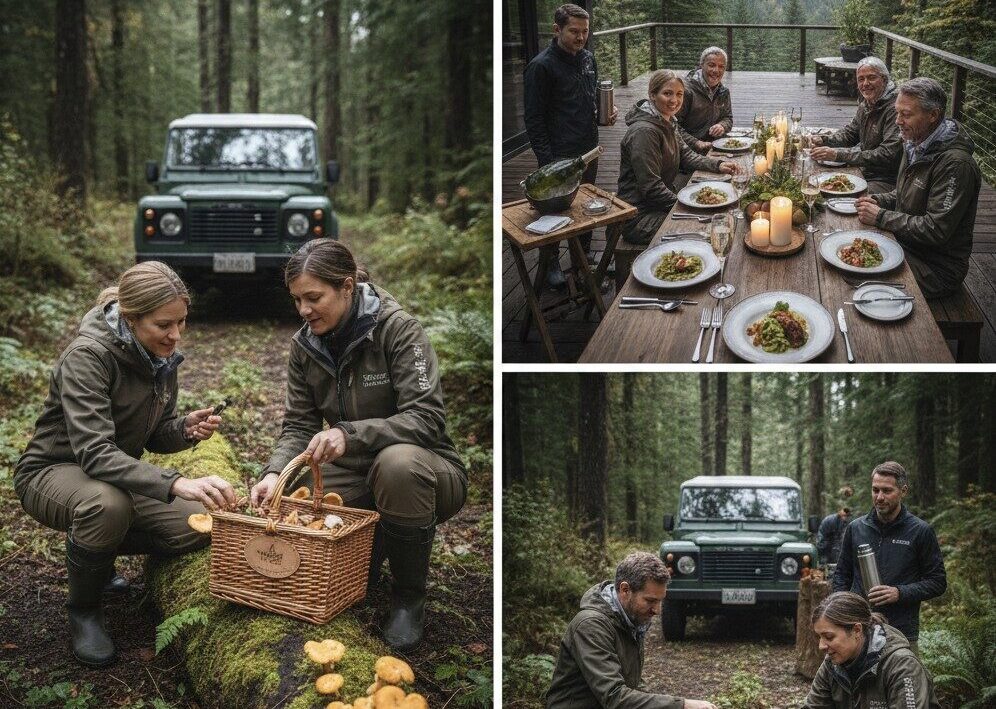
- Luxury Field Kits: Providing guests with branded high-end rain boots, woven baskets, and harvesting knives.
- Elevated Breaks: A mid-hike pause featuring a thermos of craft herbal tea or a champagne toast in a forest clearing.
- Concierge Transport: Utilizing vintage Land Rovers or private boats to access remote foraging grounds.
3. Uncompromising Safety Protocols
Safety is the unglamorous but vital backbone of foraging. Clear protocols must be established to ensure guests never consume anything without explicit validation from the expert. This strict adherence to safety actually enhances the perceived value—it reinforces that the guest is in the hands of a true master.
The Culinary Payoff: From Forest to Fork
The foraging excursion is only the first half of the experience. The emotional crescendo occurs back at the property, during the “Full Circle” dinner.
This is where the F&B team shines. When a guest sits down to dinner and sees the wild ramp pesto or the huckleberry gastrique made from ingredients they harvested hours earlier, the meal transcends sustenance. It becomes a personal achievement.
For the culinary team, this requires a flexible, “market-style” approach to menu planning. Chefs must be willing to adapt dishes based on the day’s yield. This agility signals to the guest that the kitchen is truly in sync with the environment, rather than relying on static supply chains.
Sustainability as a Brand Pillar
Finally, foraging offers a natural platform to discuss sustainability and stewardship without feeling didactic. It allows properties to demonstrate their commitment to the land by teaching the principles of “honorable harvest”—taking only what is needed and leaving the ecosystem intact for future growth.
By framing the experience around conservation, hotels align themselves with the values of the eco-conscious traveler. It proves that the property is not just occupying the land, but protecting it.
The Bottom Line
In a competitive landscape where high thread counts and infinity pools are ubiquitous, differentiation lies in the unique. You can replicate a suite, but you cannot replicate a wild landscape. By inviting guests to step off the manicured path and into the wild, you offer them a genuine, unscripted encounter with the destination—an experience that tastes better than anything money can buy.
🏷️#CuratedForaging #BeyondFarmToTable 🍽️#ForestToFork #CulinaryExcursions #SustainableDining 🗝️#LuxuryExperience #EcoConsciousTravel🌲#WildHarvest