
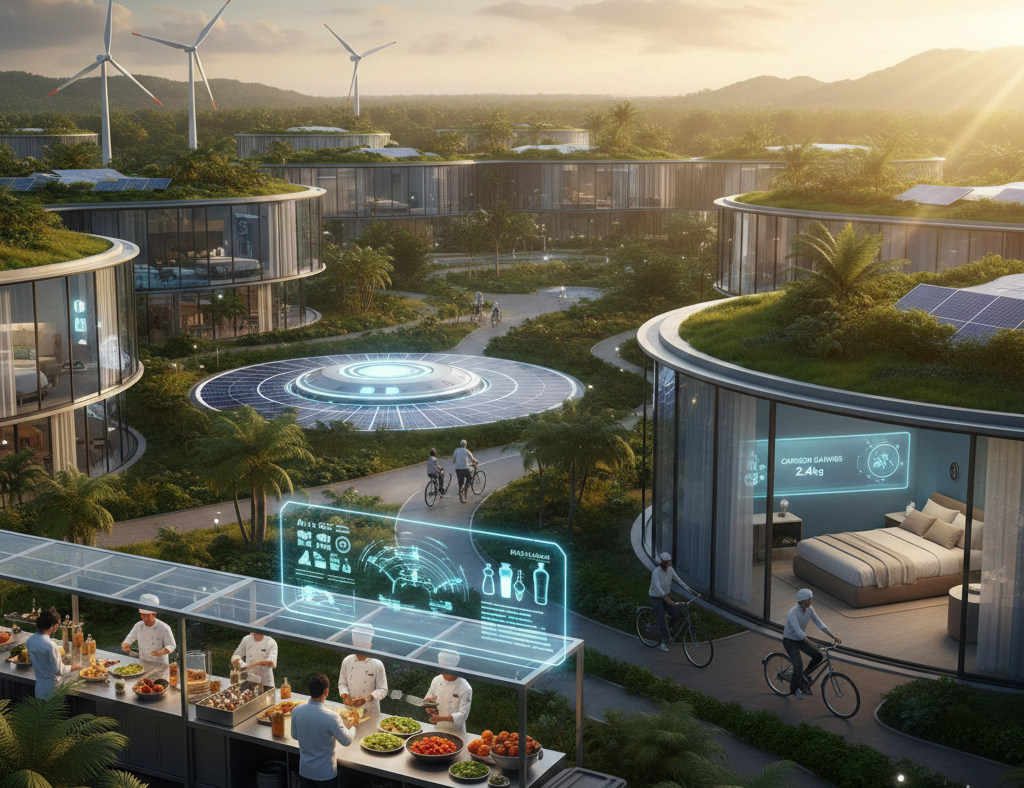
The global wanderlust is back, but so is the stark reality: tourism and hospitality are significant contributors to climate change. From energy-guzzling resorts to extensive travel networks, the industry faces immense pressure to reduce its carbon footprint. The good news? We’re not facing this challenge unarmed. In 2026, Artificial Intelligence (AI) has emerged as the most powerful tool in the sector’s fight for sustainability, transforming how hotels, airlines, and tour operators achieve net-zero ambitions.
Gone are the days when AI was just a chatbot or a personalized recommendation engine. Today, it’s the backbone of “Precision Sustainability,” enabling hotels to cut operational carbon by up to 20% and empowering guests to make greener choices, often without even realizing it.
Beyond the Buzzword: AI in Action
Let’s explore how AI is systematically decarbonizing the entire guest journey, from the moment a trip is planned to the final checkout.
1. Zero-Waste Kitchens: The AI Chef Tackles Food Waste
Food waste is a silent killer of sustainability efforts, often accounting for 15% of all hospitality waste and a significant source of methane emissions. AI is turning the tide with smart kitchen solutions:
- Automated Food Waste Tracking: Advanced computer vision systems, like those from Orbisk or Winnow, sit above waste bins, visually identifying and weighing discarded food. By 2026, these systems will be fully integrated with a hotel’s ERP (Enterprise Resource Planning) software, automatically adjusting procurement orders. If the kitchen consistently throws away 50kg of potatoes each week, the AI will recommend a 10% reduction in future orders, directly preventing waste.
- Dynamic Menu Engineering: AI analyzes plate waste data, guest preferences, and even upcoming booking numbers to optimize menus. If a specific dish consistently sees high waste on low-occupancy days, the AI might suggest smaller portions, a substitute ingredient, or its temporary removal from the menu, tailoring offerings for maximum efficiency.
- Predictive Preparation: By predicting guest occupancy with over 95% accuracy, AI helps kitchens move away from “just-in-case” overproduction. This prevents the costly and carbon-intensive preparation of food that ultimately goes to waste.
2. Smart Room Orchestration: The Energy-Saving Sanctuary
The “smart room” is no longer about voice-activated curtains; it’s an intelligent energy management hub.
- Occupancy-Based Energy Management: Beyond basic motion sensors, AI uses thermal imaging, predictive algorithms, and historical data to anticipate guest presence. It keeps rooms in a “Deep Eco Mode” (minimal heating/cooling) until 15 minutes before a guest’s predicted arrival, ensuring comfort while dramatically reducing energy consumption.
- Circadian and Thermal Optimization: AI controls smart window tints and blinds based on the sun’s position and intensity, minimizing solar heat gain and reducing the need for aggressive air conditioning. This not only saves energy but also enhances guest comfort and well-being.
- Predictive Maintenance: AI continuously monitors the energy signatures of in-room appliances—from minibars to AC units. If an appliance begins drawing unusual amounts of power, the system flags it for repair before it fails or becomes an energy drain, extending its lifespan and preventing energy waste.
3. “Green” Guest Discovery and Sustainable Transport
AI is transforming how guests plan and travel, making sustainable choices the default.
- Sustainability-First Travel Planning: “Agentic AI” (autonomous travel assistants) now prioritize hotels and experiences based on verified, real-time ESG data. If a hotel isn’t transparent with its carbon footprint or sustainability certifications, AI booking platforms are less likely to recommend it.
- Multi-Modal Route Optimization: For local excursions, AI seamlessly integrates electric shuttle services, public transport, and bike-sharing options into personalized itineraries, making it easier for guests to forgo private car rentals.
- Optimized Aviation Routes: Airlines are using AI to analyze real-time weather patterns, air traffic control data, and wind conditions to optimize flight paths, leading to significant fuel savings and reduced emissions per flight.
The Challenge of the AI Footprint
While AI is a powerful decarbonization tool, its computational demands require massive amounts of energy. A critical focus for 2026 is ensuring that the energy savings generated by AI aren’t offset by the carbon footprint of the AI itself. Leading hospitality brands are increasingly mandating that their AI vendors operate on 24/7 Carbon-Free Energy (CFE), pushing for a truly net-positive impact.
The Future is Smart and Sustainable
AI isn’t just a technological upgrade; it’s a fundamental shift towards a more sustainable tourism and hospitality industry. By automating efficiency, predicting demand, and empowering greener choices, AI is making net-zero ambitions an achievable reality. The future of travel is not just about memorable experiences, but about responsible ones, powered by intelligent systems working tirelessly behind the scenes to protect our planet.
#SustainableTourism2026 #AITravelPlanner #GreenPropTech #SmartHospitality #PrecisionSustainability #NetZeroTravel #EnergyOptimization #Decarbonization